Winning in Dota 2 isn’t just about mechanics or flashy plays—it’s about understanding the deeper systems that decide games. If you’re here, you’re likely looking to sharpen your edge: whether that means mastering Moll strategies, adapting to the latest meta shifts, or preparing like the pros before a high-stakes match. This article is built to do exactly that.
We break down current trends shaping competitive play, analyze evolving hero priorities, and explain how objective control in MOBAs consistently separates coordinated teams from chaotic ones. From laning decisions to late-game map pressure, you’ll see how small strategic adjustments create massive advantages over time.
Our insights are grounded in detailed match reviews, high-MMR gameplay analysis, and close study of professional drafts and tournament performances. Instead of recycled tips, you’ll get focused, meta-relevant guidance you can apply immediately.
If your goal is to play smarter, adapt faster, and win more consistently, you’re in the right place.
From Chaos to Control: A Framework for MOBA Mastery
For gamers looking to elevate their ranked match performance, understanding objective control strategies is crucial, and it pairs well with the right gear—like the Molldoto2 PC Game Pad, which you can learn more about in our detailed guide – for more details, check out our How Much Is Molldoto2 Pc Game Pad.
Most guides tell you to “play smarter.” That’s vague. This framework breaks matches into three controllable phases: Foundation, Conversion, and Closure.
- Foundation (0–10 min): Track wave states, cooldown trades, and jungle pathing patterns. Small leads compound (think chess, not button-mashing).
- Conversion (10–25 min): Translate kills into towers, vision, and objective control in MOBAs. Gold without structure is just shiny noise.
- Closure (25+ min): Force uneven fights through vision denial and tempo resets.
Some argue MOBAs are too chaotic for systems. Yet pro VOD analysis shows repeatable macro triggers—reset timers, item spikes, and lane priority windows—consistently decide games.
Winning the First 10 Minutes: The Art of the Laning Phase
The first 10 minutes decide more games than most players realize. If you lose lane hard, you’re not just behind—you’re playing catch-up for the next 20 minutes.
Mastering Creep Score (CS)
Creep Score (CS) is the number of minions you land the killing blow on. It’s the FOUNDATION of your economy. More CS equals more gold, which equals earlier items and stronger power spikes.
Under pressure, focus on:
- Watching minion health bars, not your opponent’s hero model
- Using animation-canceling to secure tight last hits
- Holding abilities to guarantee cannon/flagbearer creeps
If you’re shoved under tower, remember the basic rule: melee creeps usually need two tower shots plus one auto; ranged creeps need one tower shot plus two autos (adjust for your damage). Practice this until it’s automatic.
Effective Trading
Trading means exchanging resources—HP and mana—with your opponent. Good trades leave you healthier or with better sustain.
Be aggressive when:
- You hit a level spike first (LEVEL 2 or 6 is huge)
- Key enemy abilities are on cooldown
Play safe when:
- The wave is large and will punish you
- You’re low on mana and can’t retaliate
Some argue constant aggression wins lanes. Sometimes true. But smart players know patience often wins harder matchups.
Wave Management 101
Wave control creates advantages beyond kills:
- Freezing near your tower = safe farming and gank setup
- Slow-pushing = massive wave crash and roam timer
- Hard-pushing = priority for objectives
This directly impacts objective control in MOBAs.
Early Jungle and Roaming Awareness
Track the enemy jungler. Watch minimap patterns. If they show top, you can pressure bot.
Roam when:
- Your wave is fully pushed
- Your laner must stay to farm
- You can impact another lane immediately
For deeper mechanics, review high-level breakdowns at Dota 2. PRO TIP: If you don’t know where the jungler is, assume they’re near you. ALWAYS.
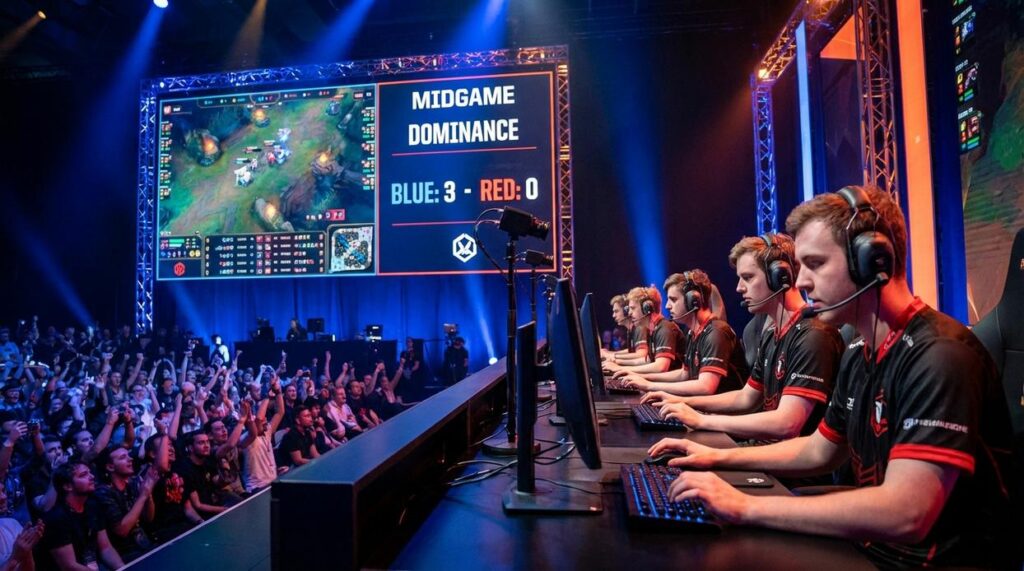
The Mid-Game Transition: Turning Small Leads into Map Dominance

A 2k gold lead at 15 minutes means nothing if you don’t know why you’re ahead. The mid-game starts by identifying your win condition—your team’s clearest path to victory. Are you built for 5v5 team fights with strong ultimates? A split-push composition that thrives on map pressure? Or a pick-off lineup that hunts isolated targets? Many players default to grouping mid (because that’s what everyone does), but that’s often wrong. A split-push draft grouping early is like buying a Ferrari to sit in traffic.
Identifying and Playing Your Win Condition
Look at scaling, cooldowns, and tower damage. If your carry spikes at two items, stall and protect. If you have global mobility, force uneven fights. The unique edge most players miss? Track enemy win conditions just as closely. Denying their timing window is often stronger than forcing yours.
Shift from lanes to objective control in MOBAs. Towers, Roshan/Baron, and jungle vision convert kills into permanent advantages. Before starting a major objective, push adjacent lanes first (this forces the enemy to show). Then establish vision before committing—not after.
Advanced vision means deep wards behind tier-two towers and along jungle choke points. These aren’t defensive wards; they’re permission slips for aggressive farming.
Tempo—defined as the speed at which your team forces reactions—comes from efficient rotations. Move first, clear waves quickly, invade together. Critics argue constant movement risks overextension. True. But controlled aggression, synced with vision and cooldowns, suffocates opponents.
If you want deeper macro breakdowns, review core moba tactics every competitive player should master.
Pro tip: After every won fight, immediately ask, “What structure falls?” If the answer is none, you’re leaving gold on the table.
Closing It Out: Executing High-Stakes Late-Game Scenarios
Late game fights are less about mechanics and more about clarity. Let’s simplify the chaos.
Team Fight Positioning
In a 5v5, roles split into frontline, backline, and flank. The frontline absorbs damage and starts fights. The backline—usually your carry and supports—deal damage or provide control from safety. A flank approaches from the side to disrupt priority targets. Positioning means standing where you maximize impact while minimizing risk. If your carry steps forward too early, they disappear in seconds. So, protect damage dealers first.
Target Prioritization
Next, who do you hit? Use a two-part test: threat and vulnerability. Threat is how much damage or control someone can output. Vulnerability is how easy they are to kill. The ideal target scores high in both. If the enemy assassin dives alone, they become priority—even if the tank is closer.
Managing Buybacks and Death Timers
Late-game death timers are long, and buyback lets a hero instantly respawn at a gold cost. If enemies lack buyback, force fights. If your core lacks it, disengage. This awareness defines objective control in MOBAs.
Securing the Final Objective
Finally, push with waves synced, maintain vision, and chip safely. Don’t dive fountains.
Beyond the Clicks: Mastering the Mental Game
Tilting happens. You die twice, chat flames you, and suddenly you’re forcing plays. STOP. Breathe for five seconds, unclench your jaw, and ask: what is the next HIGH-PERCENTAGE move?
• Mute toxic players.
• Type short, forward-looking pings like “rosh 2:00” to support objective control in MOBAs.
• Review one death per game and write the trigger.
Effective communication wins games. Say what matters, not who messed up (yes, even if it was them). After matches, watch replays at 1.5x, pausing for positioning errors or cooldown misuse. Improvement LOVES clarity, not ego. DAILY
Improvement in MOBAs rarely fails because of mechanics; it fails because players drown in noise. This blueprint breaks a match into controllable phases so you replace chaos with intent. Instead of vaguely “playing better,” you isolate laning, mid-game rotations, and team fights as separate training blocks. That focus builds transferable skills competitors barely discuss, like tempo tracking and objective control in MOBAs as a measurable habit, not a buzzword. Master one phase at a time. In your next match, commit to wave management for ten minutes. Small, repeatable wins compound (yes, even in solo queue). Progress beats panic every time.
Mastering the Meta and Taking Control
You came here to understand how meta shifts, playstyle adjustments, and smarter decision-making can elevate your Dota2 performance. Now you have a clearer blueprint for adapting faster, drafting smarter, and executing with purpose.
The reality is this: most players stay stuck because they react too slowly to patches, ignore objective control in MOBAs, and fail to prepare like high-level competitors. That frustration—losing winnable games, falling behind in ranked, feeling outpaced by the meta—doesn’t have to continue.
The solution is consistent refinement. Study evolving strategies. Break down pro-level match preparation. Focus on cleaner rotations, tighter timings, and disciplined objective play. Small strategic upgrades compound into massive MMR gains.
If you’re serious about climbing and dominating your bracket, don’t stop here. Dive deeper into advanced breakdowns, apply these strategies in your next matches, and sharpen your edge every week. Thousands of competitive players rely on these insights to stay ahead of the meta—now it’s your turn.
Queue up with a plan. Execute with confidence. Start turning knowledge into wins today.
 Founder
Tavien Eldricson is the kind of writer who genuinely cannot publish something without checking it twice. Maybe three times. They came to hot topics in gaming through years of hands-on work rather than theory, which means the things they writes about — Hot Topics in Gaming, Doto2 Meta Shifts and Hero Counters, Moll Gaming Tactics and Strategies, among other areas — are things they has actually tested, questioned, and revised opinions on more than once.
That shows in the work. Tavien's pieces tend to go a level deeper than most. Not in a way that becomes unreadable, but in a way that makes you realize you'd been missing something important. They has a habit of finding the detail that everybody else glosses over and making it the center of the story — which sounds simple, but takes a rare combination of curiosity and patience to pull off consistently. The writing never feels rushed. It feels like someone who sat with the subject long enough to actually understand it.
Outside of specific topics, what Tavien cares about most is whether the reader walks away with something useful. Not impressed. Not entertained. Useful. That's a harder bar to clear than it sounds, and they clears it more often than not — which is why readers tend to remember Tavien's articles long after they've forgotten the headline.
Founder
Tavien Eldricson is the kind of writer who genuinely cannot publish something without checking it twice. Maybe three times. They came to hot topics in gaming through years of hands-on work rather than theory, which means the things they writes about — Hot Topics in Gaming, Doto2 Meta Shifts and Hero Counters, Moll Gaming Tactics and Strategies, among other areas — are things they has actually tested, questioned, and revised opinions on more than once.
That shows in the work. Tavien's pieces tend to go a level deeper than most. Not in a way that becomes unreadable, but in a way that makes you realize you'd been missing something important. They has a habit of finding the detail that everybody else glosses over and making it the center of the story — which sounds simple, but takes a rare combination of curiosity and patience to pull off consistently. The writing never feels rushed. It feels like someone who sat with the subject long enough to actually understand it.
Outside of specific topics, what Tavien cares about most is whether the reader walks away with something useful. Not impressed. Not entertained. Useful. That's a harder bar to clear than it sounds, and they clears it more often than not — which is why readers tend to remember Tavien's articles long after they've forgotten the headline.