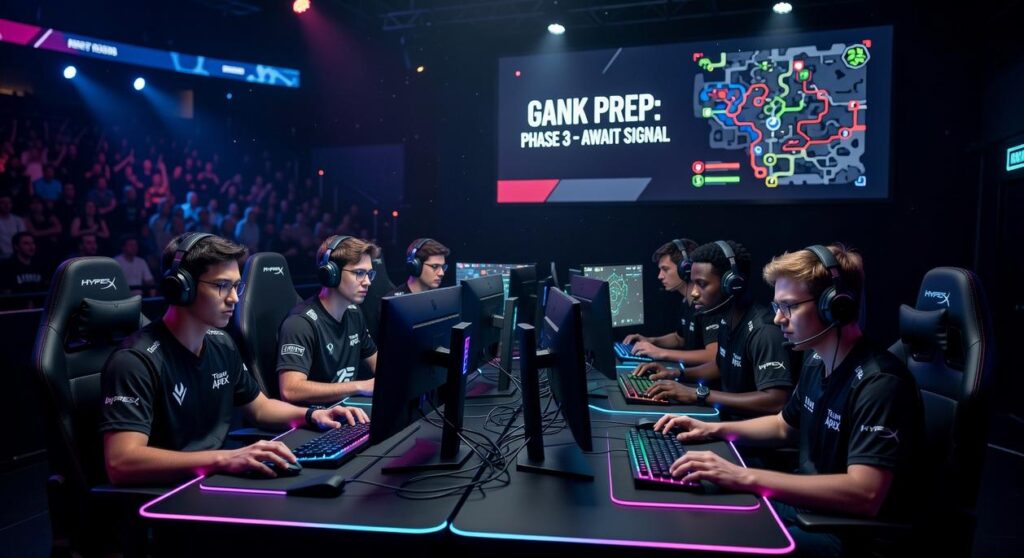
Winning your lane is only half the battle—true impact comes from mastering the map. This roaming playstyle guide breaks down how to apply pressure beyond simple ganks, turning movement into calculated, game-shifting tempo. Too often, players roam aimlessly, sacrificing gold and experience while creating little value for their team. That’s how small mistakes snowball into lost objectives. Drawing from thousands of high-level matches, this guide focuses on efficient rotations, smart timing, and heroes built to dominate the early map. You’ll learn exactly when to leave lane, how to maintain momentum, and what separates a random roamer from a true playmaker.
The Art of the Rotation: Reading the Game Before You Move
To master the aggressive roaming playstyle effectively, it’s crucial to align your strategy with strong communication, as detailed in our piece on Shotcalling Insights from Professional Team Captains, which emphasizes the importance of teamwork in high-stakes scenarios.
Great rotations aren’t random—they’re timed. Identifying prime opportunities means spotting moments when the map tilts in your favor. Did the enemy mid just overextend past the river? Is a power rune spawning at 6:00? Does your offlaner finally have Ravage or Duel ready? These are green lights. A rotation without a trigger is just a walk (and usually a wasted one).
Still, some players argue you should stay glued to lane for guaranteed farm. They’re not wrong—experience and gold are predictable. But Dota isn’t about predictability; it’s about leverage. One successful gank can snowball two lanes at once. The key is judgment.
The Roamer’s Economy
Every move costs something. Leaving lane sacrifices:
- Guaranteed creep XP
- Reliable gold income
- Tower pressure
Ask yourself: Is the kill probability above 60%? If yes, it’s often worth it. To minimize losses, push your wave before rotating or stack a nearby camp for later recovery. Pro tip: secure bounty or wisdom runes during rotations to offset missed farm.
Pathing and Vision Control
Predictable paths get countered. Use Smoke of Deceit to dodge common ward spots and carry a sentry to de-ward cliffs before committing. Think of it like flanking in a heist movie—kick the front door and you’re expected; slip through the back and you’re legendary.
Communicating Intent
Ping. Type. Signal cooldowns. A silent gank is a failed gank. Even the best roaming playstyle guide won’t save you if your ally isn’t ready to follow up. Clear communication turns movement into momentum.
Picking Your Playmaker: Hero Archetypes Built to Roam
Choosing the right roamer can feel overwhelming at first. However, once you understand the core archetypes, the decision becomes much clearer.
The Lockdown Specialist revolves around reliable, long-duration crowd control (abilities that restrict movement or actions). Think stuns, roots, or silences that last long enough for teammates to follow up. Crowd control is often the most valuable roaming asset because it guarantees setup. Even if your damage is low, a two-second stun at level three can secure First Blood. Some argue vision and damage matter more—but without lockdown, kills slip away. If your goal is consistency, start here.
The High-Impact Nuker brings explosive magical burst damage early. Burst damage means unloading abilities quickly to eliminate a target before they react. These roamers thrive in chaotic lanes, snowballing (gaining increasing advantage from early kills) into mid-game dominance. Critics say they fall off later—and that’s true if you don’t convert early wins into objectives. The solution? Gank, then immediately pressure towers.
The Global Threat changes the map without physically moving. Heroes with teleporting ultimates or map-wide abilities force enemies to play cautiously. It’s chess, not checkers (yes, even if your teammates play like it’s Mario Kart). Presence alone creates pressure.
Finally, follow this roaming playstyle guide checklist: high base movement speed, impactful level 1–3 abilities, and minimal item dependence. In short, roamers succeed through timing, not gold. Master that, and you control the pace of the entire match.
Gearing Up for the Gank: Essential Items and Skill Paths

I still remember a match where I skipped Boots of Speed for extra stats. By minute four, every gank failed—I simply couldn’t close the gap. That’s when roaming clicked for me.
The Roamer’s Starting Kit
Early mobility and vision win games. Boots of Speed, Smoke of Deceit (an item that makes nearby allies invisible to enemy wards), and Observer Wards (free vision tools) create pressure that raw stats never will. Some argue early stat items make you “tankier.” True—but if you can’t reach your target, those stats don’t matter (you can’t punch what you can’t catch).
| Item | Purpose | Why It Matters Early |
|---|---|---|
| Boots of Speed | Mobility |
Enables faster rotations |
| Smoke of Deceit | Hidden movement | Bypasses common ward spots |
| Observer Wards | Vision control | Secures rune and jungle paths |
Item Progression Philosophy
Your job isn’t farming a late-game luxury. It’s amplifying impact. Blink Dagger (instant repositioning) and Rod of Atos (root-based lockdown) multiply kill potential. Pro tip: if your draft lacks catch, prioritize lockdown over mobility.
Skill Build Strategy
In any effective roaming playstyle guide, disables come first. Max stuns and nukes at levels 2–4 to spike early. Passives can wait. If you’re applying early pressure, you’ll also create space for objectives like those discussed in split pushing tactics inspired by classic dota strategies.
Beyond the Kill: Advanced Roaming Tactics
Getting kills is flashy. However, elite roamers know pressure—not kills—wins games.
Applying “Invisible” Pressure
First, embrace absence. When you’re missing from the map, enemies must assume you’re behind them. That uncertainty forces defensive positioning and early vision purchases (which delays core items). Even if you don’t gank, you’ve already taxed their economy. Therefore, rotate unpredictably and avoid showing on obvious ward spots. Pro tip: smoke simply to disappear from vision, not just to fight.
Efficient Movement
Next, optimize every rotation. Stack jungle camps while moving between lanes. A single stacked Ancient camp can accelerate your carry’s timing by minutes. Instead of wandering river aimlessly, path through camps at :53 to stack, then pressure a lane. Over time, this efficiency compounds.
Disrupting the Enemy’s Flow
Meanwhile, cut creep waves behind towers when it’s safe. This forces teleports and creates chaos (and tilted opponents make mistakes). Additionally, snipe couriers when possible—delayed items can completely stall momentum.
The Art of the Counter-Gank
Finally, anticipate aggression. Watch enemy supports vanish? Mirror their movement. Position just outside vision and turn their dive into a numbers advantage. While some argue reactive play is passive, disciplined counter-ganks often swing games harder than reckless dives.
If you apply these principles from a roaming playstyle guide, you’ll control tempo—not just the scoreboard.
From Wanderer to Game-Winner
You came here to understand how to roam with purpose—and now you know that great rotations aren’t random, they’re deliberate. This roaming playstyle guide showed you that winning the map is about timing, efficiency, and sharp game sense, not wandering between lanes hoping for impact.
The difference between carrying and costing your team the game often comes down to one bad, planless rotation. Falling behind as a roamer means lost pressure, lost objectives, and lost momentum.
Take action in your very next match: focus on one core concept—rune control, cleaner pathing, or smarter rotation timing—and execute it with intent. Master these fundamentals, and you won’t just roam—you’ll dictate the pace of the entire game.
 Content Strategist
Brenda Ojedalian is the kind of writer who genuinely cannot publish something without checking it twice. Maybe three times. They came to competitive match prep guides through years of hands-on work rather than theory, which means the things they writes about — Competitive Match Prep Guides, Dota-Inspired Playstyle Breakdowns, Doto2 Meta Shifts and Hero Counters, among other areas — are things they has actually tested, questioned, and revised opinions on more than once.
That shows in the work. Brenda's pieces tend to go a level deeper than most. Not in a way that becomes unreadable, but in a way that makes you realize you'd been missing something important. They has a habit of finding the detail that everybody else glosses over and making it the center of the story — which sounds simple, but takes a rare combination of curiosity and patience to pull off consistently. The writing never feels rushed. It feels like someone who sat with the subject long enough to actually understand it.
Outside of specific topics, what Brenda cares about most is whether the reader walks away with something useful. Not impressed. Not entertained. Useful. That's a harder bar to clear than it sounds, and they clears it more often than not — which is why readers tend to remember Brenda's articles long after they've forgotten the headline.
Content Strategist
Brenda Ojedalian is the kind of writer who genuinely cannot publish something without checking it twice. Maybe three times. They came to competitive match prep guides through years of hands-on work rather than theory, which means the things they writes about — Competitive Match Prep Guides, Dota-Inspired Playstyle Breakdowns, Doto2 Meta Shifts and Hero Counters, among other areas — are things they has actually tested, questioned, and revised opinions on more than once.
That shows in the work. Brenda's pieces tend to go a level deeper than most. Not in a way that becomes unreadable, but in a way that makes you realize you'd been missing something important. They has a habit of finding the detail that everybody else glosses over and making it the center of the story — which sounds simple, but takes a rare combination of curiosity and patience to pull off consistently. The writing never feels rushed. It feels like someone who sat with the subject long enough to actually understand it.
Outside of specific topics, what Brenda cares about most is whether the reader walks away with something useful. Not impressed. Not entertained. Useful. That's a harder bar to clear than it sounds, and they clears it more often than not — which is why readers tend to remember Brenda's articles long after they've forgotten the headline.