
Every gamer knows the frustration: your friends are ready to squad up, but half are on PlayStation, others on Xbox, and a few on PC. Instead of playing together, you’re separated by logos and login screens. For years, these platform “walled gardens” have fragmented communities, locking players into isolated ecosystems and limiting competitive growth. The rise of cross-platform multiplayer gaming is tearing down those barriers, creating a unified battlefield where skill—not hardware—decides the outcome. In this article, we break down not only what this feature means for everyday players, but also the technical challenges and competitive implications that serious, pro-level gamers analyze closely.
Defining the Cross-Platform Connection
As cross-platform play continues to break down barriers between gaming communities, players may find themselves grappling with unexpected issues, like the frustrating inability to download certain titles—such as Molldoto2 on PC—leading to a deeper exploration of the connectivity challenges that still exist in this evolving landscape – for more details, check out our Why Can’t I Download a Game Molldoto2 on My Pc.
At its core, Cross-Platform Play (or Crossplay) is the ability for players on different hardware—PlayStation 5, Xbox Series X/S, or PC—to compete or cooperate in the same online matches. In simple terms, your console choice no longer locks you into a single ecosystem. If your friend is on PC and you’re on PlayStation, you can still squad up (finally, no more “Sorry, wrong console” excuses).
However, it’s important to separate similar terms. Cross-Progression means your saves, ranks, skins, and unlocks travel with your account across devices. Start on console, continue on PC—your progress follows. Cross-Generation play, on the other hand, allows PS4 users to play with PS5 users within the same console family. That’s different from full cross-platform multiplayer gaming, which bridges entirely separate systems.
So why does this matter? First, it dramatically reduces matchmaking times by expanding the player pool. Second, it balances skill tiers—more players means fairer matches. Third, it extends a game’s lifespan, a crucial factor discussed in the rise of live service games and what it means for players.
Some argue crossplay introduces balance concerns, especially between PC and console aim systems. That’s fair. Still, most modern titles offer input-based matchmaking to level the field.
Recommendation: Enable crossplay in competitive titles unless you have a specific competitive disadvantage. Larger communities keep games alive—and your queue times short.
The Technology Behind a Shared Battlefield
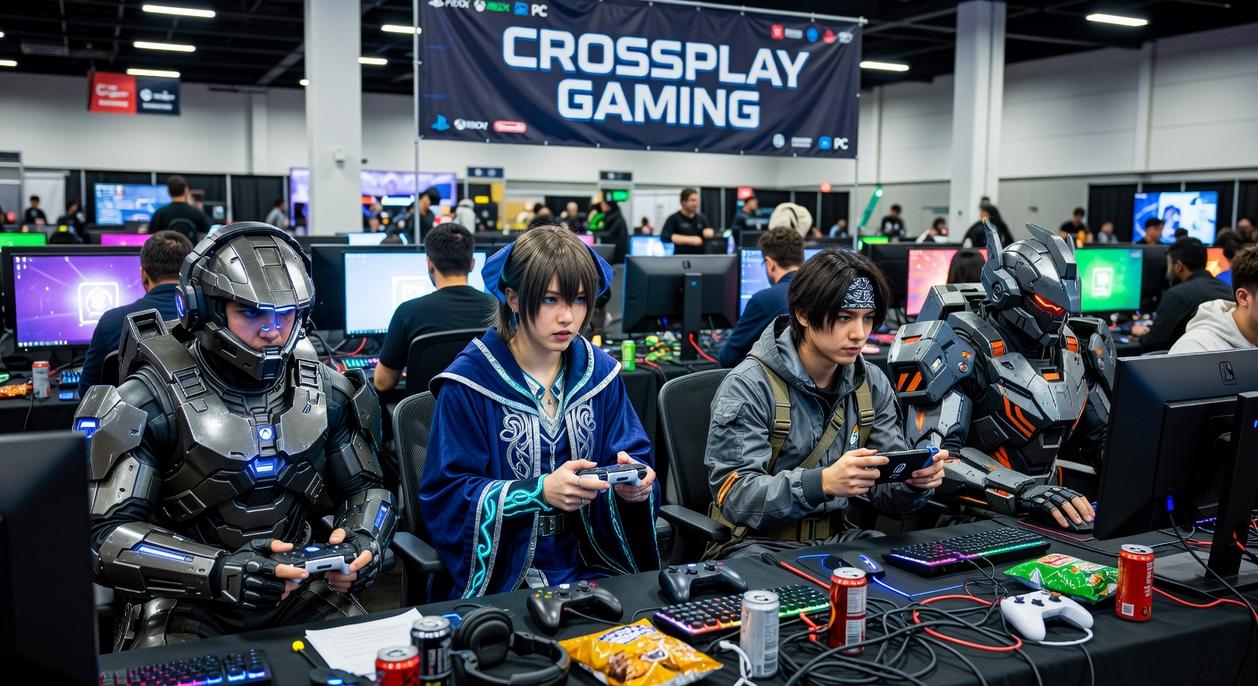
Building a unified online battlefield sounds simple—until you realize every platform speaks a slightly different technical language. The first hurdle is server architecture. Developers must create a centralized server environment where PlayStation, Xbox, and PC clients all communicate identically. That means synchronized physics calculations, identical hit registration logic, and perfectly mirrored patch deployment. One mismatched update can fracture the player base instantly (and yes, it’s happened before).
Version parity—every platform running the exact same build—is non-negotiable. Certification delays on consoles often complicate this, forcing studios to plan updates weeks in advance.
Then comes the input debate: mouse and keyboard versus controller. Critics argue PC players always have the edge due to precision aiming. They’re not wrong. But developers counterbalance this through:
- Input-based matchmaking (grouping similar control schemes)
- Carefully tuned aim assist that slows reticle movement near targets
- Adjustable sensitivity curves to reduce disparity
The goal isn’t identical performance—it’s competitive fairness.
Another overlooked pillar is the master account system. Platforms tie into a central identity layer—think unified progression, friends lists, and cosmetics bound to one profile. This identity abstraction is what truly enables cross-platform multiplayer gaming.
Pro tip: Competitive integrity hinges more on backend consistency than flashy graphics. Without rock-solid infrastructure, the battlefield collapses.
The Player’s Perspective: Unprecedented Access vs. New Challenges
For many players, the rise of cross-platform multiplayer gaming feels like the best plot twist since the first time Master Chief removed his helmet (well, almost). The upside is obvious:
- Friends can squad up regardless of hardware.
- Communities grow larger and more diverse.
- Faster queue times mean less lobby-watching and more actual gameplay.
That social flexibility matters. When your Dota stack includes one friend on console and another on a high-end PC, inclusion stops being a technical issue and becomes the default. More players also mean healthier matchmaking pools, which often translates to fairer skill brackets.
Still, it’s not all flawless victory screens.
- High-refresh PC setups can create performance gaps against console players.
- Less secure platforms may introduce higher cheating risks that affect everyone.
Some argue these imbalances undermine competitive integrity entirely. And honestly, it’s hard to say the concern is baseless. Frame rate advantages are measurable (higher FPS can improve reaction time and tracking, according to NVIDIA performance studies), and anti-cheat systems remain an arms race.
Yet, while solutions are still evolving—and we don’t have every answer—the broader accessibility and community growth make this shift a net positive. Imperfect? Yes. Transformative? Absolutely.
Crossplay in Action
Crossplay has shifted from novelty to expectation, and the data proves it. When Fortnite rolled out full crossplay in 2018, Epic reported 78 million players in a single month, a surge analysts partly attributed to unified matchmaking across console, PC, and mobile (Epic Games, 2018). By removing platform walls, friends could squad up instantly, which in turn fueled retention and in-game spending. Apex Legends followed a similar path, surpassing 100 million players within two years, with crossplay cited as a key engagement driver (EA, 2021).
Meanwhile, Call of Duty: Warzone tackled the fairness debate head-on. Critics argued that mixing mouse-and-keyboard with controllers would tilt competition. However, its input-based matchmaking—grouping players by control method—helped stabilize competitive balance. Activision noted that crossplay increased average match fill speed and reduced lobby wait times globally (Activision, 2020). So, does input balancing solve every issue? Not entirely, but it set a practical benchmark.
Beyond shooters, Rocket League and Fall Guys demonstrate that cross-platform multiplayer gaming keeps casual titles vibrant. Psyonix confirmed crossplay contributed to millions of concurrent players after free-to-play launched in 2020. Full lobbies mean faster queues, tighter matchmaking, and, ultimately, more fun. The numbers reinforce what players already feel daily. Across every platform.
One Community, No Borders
The rise of cross-platform multiplayer gaming stands as one of the most pro-consumer shifts in modern gaming history. For years, players were forced to choose platforms based on where their friends played, creating artificial walls between communities that should have been united. That frustration is finally fading. Crossplay has torn down those barriers, reconnecting friends and strengthening player bases across the board.
More importantly, this isn’t just a bonus feature anymore—it’s rapidly becoming the standard for any serious multiplayer release. Players now expect freedom.
Choose your platform for performance, comfort, or preference—not limitations. Demand crossplay. Support the games that support your community.
 Founder
Tavien Eldricson is the kind of writer who genuinely cannot publish something without checking it twice. Maybe three times. They came to hot topics in gaming through years of hands-on work rather than theory, which means the things they writes about — Hot Topics in Gaming, Doto2 Meta Shifts and Hero Counters, Moll Gaming Tactics and Strategies, among other areas — are things they has actually tested, questioned, and revised opinions on more than once.
That shows in the work. Tavien's pieces tend to go a level deeper than most. Not in a way that becomes unreadable, but in a way that makes you realize you'd been missing something important. They has a habit of finding the detail that everybody else glosses over and making it the center of the story — which sounds simple, but takes a rare combination of curiosity and patience to pull off consistently. The writing never feels rushed. It feels like someone who sat with the subject long enough to actually understand it.
Outside of specific topics, what Tavien cares about most is whether the reader walks away with something useful. Not impressed. Not entertained. Useful. That's a harder bar to clear than it sounds, and they clears it more often than not — which is why readers tend to remember Tavien's articles long after they've forgotten the headline.
Founder
Tavien Eldricson is the kind of writer who genuinely cannot publish something without checking it twice. Maybe three times. They came to hot topics in gaming through years of hands-on work rather than theory, which means the things they writes about — Hot Topics in Gaming, Doto2 Meta Shifts and Hero Counters, Moll Gaming Tactics and Strategies, among other areas — are things they has actually tested, questioned, and revised opinions on more than once.
That shows in the work. Tavien's pieces tend to go a level deeper than most. Not in a way that becomes unreadable, but in a way that makes you realize you'd been missing something important. They has a habit of finding the detail that everybody else glosses over and making it the center of the story — which sounds simple, but takes a rare combination of curiosity and patience to pull off consistently. The writing never feels rushed. It feels like someone who sat with the subject long enough to actually understand it.
Outside of specific topics, what Tavien cares about most is whether the reader walks away with something useful. Not impressed. Not entertained. Useful. That's a harder bar to clear than it sounds, and they clears it more often than not — which is why readers tend to remember Tavien's articles long after they've forgotten the headline.